

- BY fernanda
- POSTED IN Luxury Pool Features & Enhancements
- WITH 0 COMMENTS
- PERMALINK
- STANDARD POST TYPE
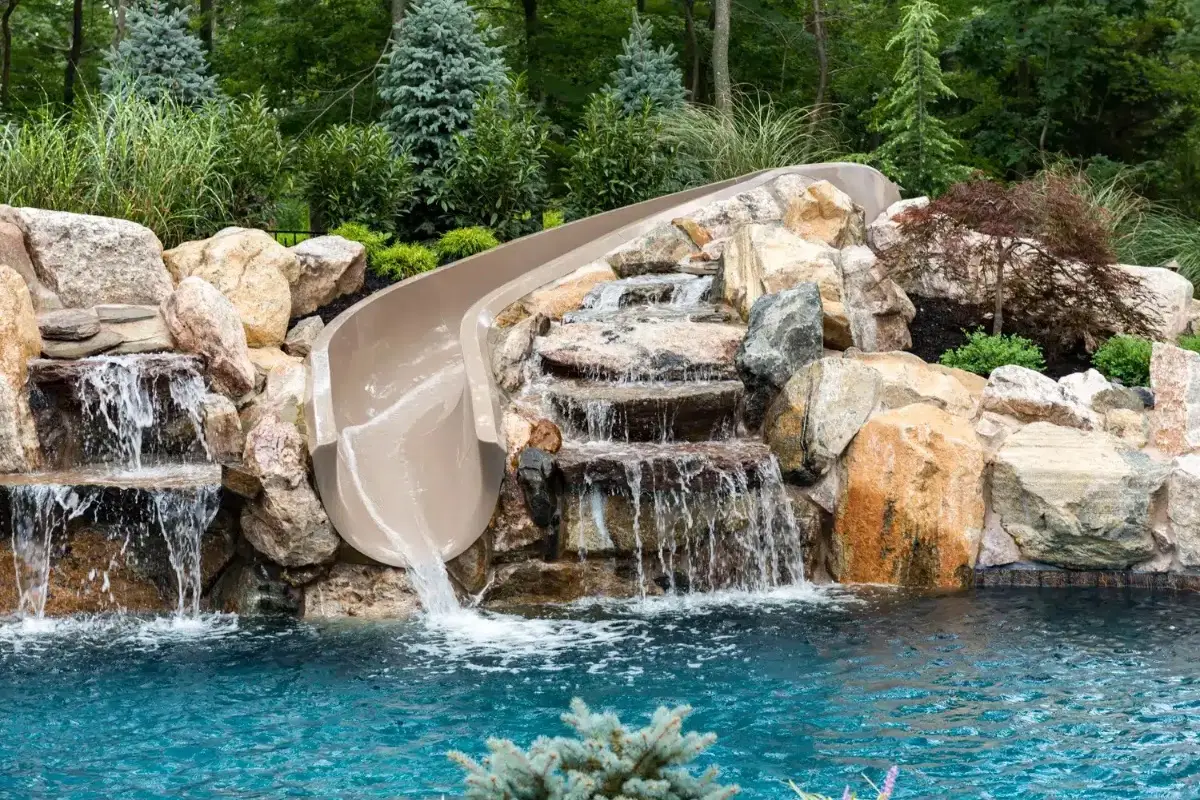
Rock features and slides transform an ordinary swimming pool into an extraordinary retreat. These elements combine architectural design with natural inspiration, creating poolscapes that feel more like private resorts than backyard amenities. Rock features include formations that mimic boulders, cascading waterfalls, grottoes, and even integrated seating. Slides can be seamlessly built into these structures, providing not only function but also flair.
Their rise in popularity is no coincidence. Homeowners increasingly desire spaces that deliver both beauty and entertainment. Rock features and slides provide an immersive environment, blending the tranquility of nature with the joy of recreation. The sound of falling water, the visual drama of stone structures, and the thrill of gliding down a slide into a shimmering pool make these additions irresistible.
Types of Rock Features & Slides
Natural Rock vs Faux Rock
Natural stone remains a classic choice, offering authenticity through materials such as sandstone, flagstone, and boulder arrangements. These stones age gracefully, developing patinas that deepen their character over time. However, they are heavy, costly, and demand strong foundations.
Faux rock, by contrast, is crafted from cast concrete or molded composites designed to replicate natural stone. These materials allow for lighter construction and greater flexibility in design while still capturing the rugged textures of genuine rock. Faux systems also permit creative color matching to harmonize with landscaping or existing architecture.
Slide Options Integrated with Rock
Prefabricated slide flumes are common in residential installations. These are manufactured pieces inserted into rock formations, blending safety engineering with artistic placement. Alternatively, hand-crafted slides are sculpted directly into the rockwork. These custom creations follow the curves of the structure, appearing as if the slide were carved naturally into a cliff face.
Complementary Elements
Rock features rarely stand alone. Waterfalls add movement and ambiance, cascading in sheets or trickles depending on design. Grottoes, caves, and tunnels introduce mystery and shade, inviting swimmers to explore. Ledges, seating niches, and integrated planters expand the deck’s usability, turning a pool into a multi-functional oasis.
Styles & Design Variants
Tropical lagoon styles evoke the look of an island hideaway, complete with lush planting and freeform curves. Rustic natural rock themes embrace earthy tones and raw stone structures. Tropical resort or tropical modern designs incorporate bold waterfalls and polished slide lines. Contemporary rock water features focus on clean geometries, sharp edges, and minimalism paired with stone textures.
Benefits of Adding Rock Features & Slides
Rock features and slides elevate both the visual and functional aspects of a pool. They provide a dramatic focal point, creating cohesion between the pool, deck, and surrounding landscape. Their entertainment value is undeniable—children, families, and guests are drawn to slides and waterfalls, making them natural gathering points.
Beyond fun, they add ambiance. The rhythmic sound of falling water calms the senses, while the rugged textures of stone complement plantings and outdoor furniture. They also enhance property value, distinguishing a pool as a luxury feature rather than a standard installation. With proper construction, rockwork is remarkably durable, hiding imperfections while resisting weather, UV exposure, and heavy use.
Key Design & Planning Considerations
Design begins with space. Rock features require careful layout to ensure they fit harmoniously within the pool and yard without overwhelming them. Elevation and topography are key—slides must align with safe depths, and rock placements must account for sightlines and shading.
Safety is paramount. Slides require proper slope, smooth finishes, and adequate water flow. Non-slip surfaces and handrails may be integrated to minimize risk. Material selection also matters: natural stone offers authenticity but may weather differently, while faux systems allow precision control over durability and resistance to chlorine or saltwater.
Structural integrity is non-negotiable. The foundations must support immense weight, and plumbing must be designed to circulate water efficiently. Drainage systems prevent stagnant water, while color matching and texture ensure the rockwork blends naturally with the surroundings.
Installation Process & Timeline
The process begins with site assessment and design. Measurements, orientation, and the interplay of sun and shade guide the layout.
Next comes foundation and framing. For slides and heavy rock formations, reinforced bases ensure safety. Once the foundation is secure, rockwork construction begins. Natural or faux rock is positioned, bonded, and sculpted into the desired form. Slides are either inserted or hand-sculpted at this stage.
Water features are then installed, with plumbing channels integrated for waterfalls, cascades, or grottos. The final stage involves sealing, texturing, and color blending to ensure cohesion. Safety features, such as handholds or non-slip treatments, are added before completion.
Maintenance & Upkeep of Rock Features & Slides
Like all pool features, rock formations and slides require maintenance. Algae prevention is essential, as rock textures can harbor organic growth. Regular cleaning prevents mineral deposits from marring surfaces.
Structural joints should be inspected, with cracks sealed promptly to prevent water intrusion. Slide surfaces demand attention to ensure they remain smooth and safe. In colder climates, winterizing protects against freeze-thaw damage, though Las Vegas homeowners face fewer such concerns.
Maintaining balanced pool water chemistry also protects the integrity of rock and slide materials, minimizing staining or premature wear.
Potential Problems & How to Prevent Them
Even well-built features face challenges. Natural rock may erode or weather unevenly, while faux systems can develop cracks if not properly supported. Water leakage beneath structures undermines stability, leading to costly repairs. Slide surfaces can wear, developing rough patches or fading under constant sun.
Structural shifting is another risk, often stemming from inadequate foundations or soil movement. Aesthetic mismatches—poorly chosen colors or textures—diminish the overall effect. These problems can be minimized through proper planning, professional installation, and routine upkeep.
Cost & Return on Investment (ROI)
The cost of rock features and slides varies dramatically. Simple boulder arrangements with a prefabricated slide may be relatively affordable, while complex grottoes with integrated waterfalls and lighting represent significant investment. Faux rock systems often provide cost efficiency without sacrificing appearance.
Compared to basic pool decks or plain plaster finishes, these features carry higher initial costs. However, they deliver substantial returns in property value, curb appeal, and lifestyle enjoyment. Homes with such amenities stand out in competitive markets and offer daily rewards to their owners.
How to Choose a Provider or Contractor for Rock Features & Slides
Not every contractor possesses the specialized skill set required for rock and slide installations. Look for experience in custom water features and proof of successful projects. Portfolios showcasing a range of styles indicate versatility.
Compliance with building codes and safety standards is non-negotiable. Contractors should also offer warranties on materials and workmanship, reflecting confidence in their craft. Clear proposals with itemized costs, timelines, and safety measures provide transparency and reduce the risk of surprises.
Case Studies
One suburban home added a modest rock slide paired with a small waterfall. The design turned a simple rectangular pool into a playful focal point without overwhelming the yard.
Another project embraced the tropical lagoon aesthetic. Featuring a grotto, cascading waterfalls, and integrated lighting, the pool became a nighttime showpiece as well as a daytime retreat.
Comparisons between natural and faux installations reveal trade-offs. Natural stone delivers authenticity but can weather unpredictably, while faux systems ensure uniformity and controlled durability. Lessons from these projects highlight the importance of choosing the right materials for the desired look, climate, and budget.
Rock features and slides redefine what a backyard pool can be. They merge form and function, offering beauty, entertainment, and long-lasting value. By carefully balancing ambition with safety and quality, homeowners can create pool environments that rival high-end resorts.
The investment pays dividends not only in property value but in moments of joy—children racing down slides, families gathering under waterfalls, and friends relaxing beside naturalistic stone features. For those ready to elevate their pool into a personal retreat, rock features and slides provide the perfect union of artistry, durability, and delight.